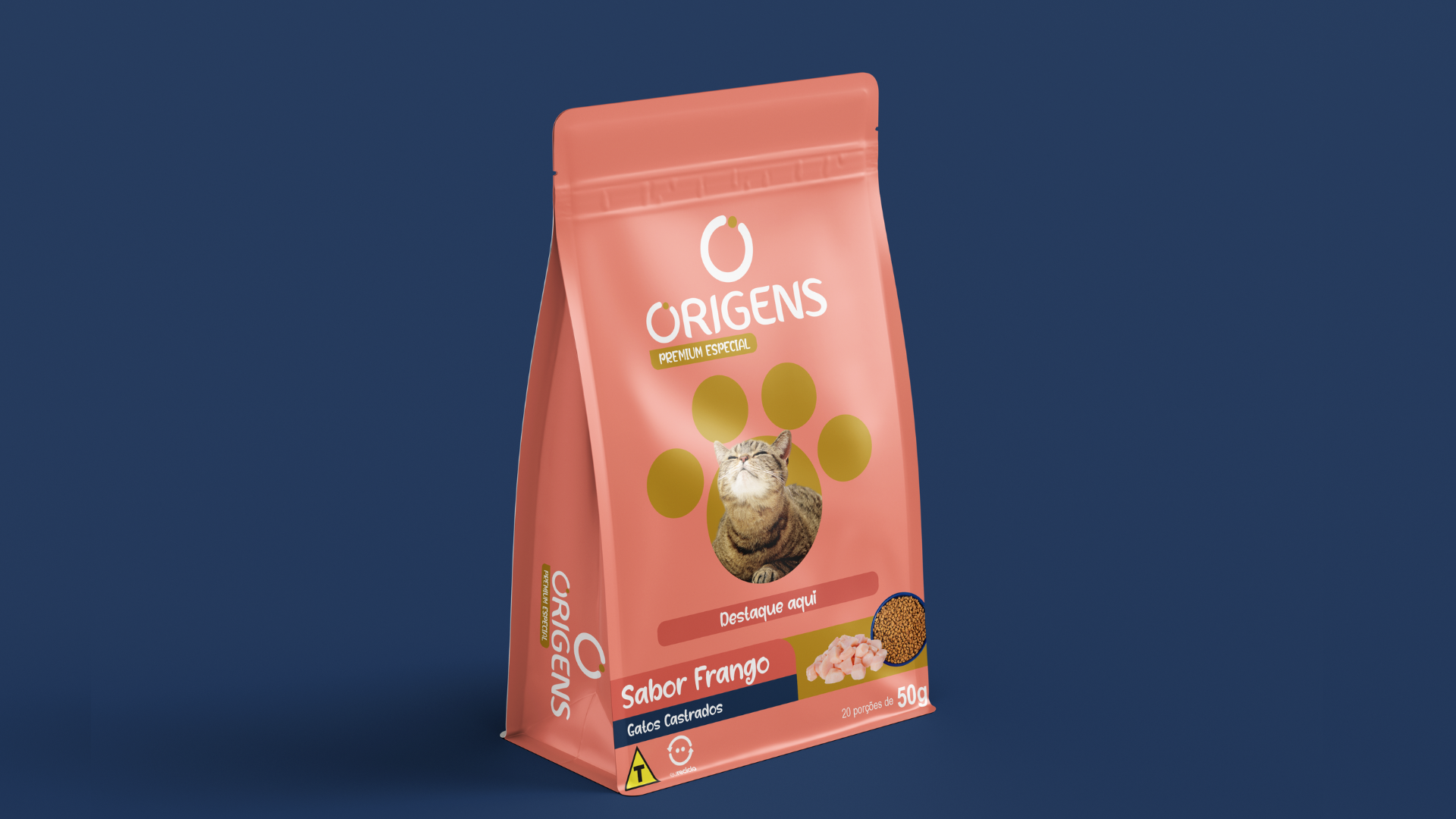
Pet Food Acessible Packaging
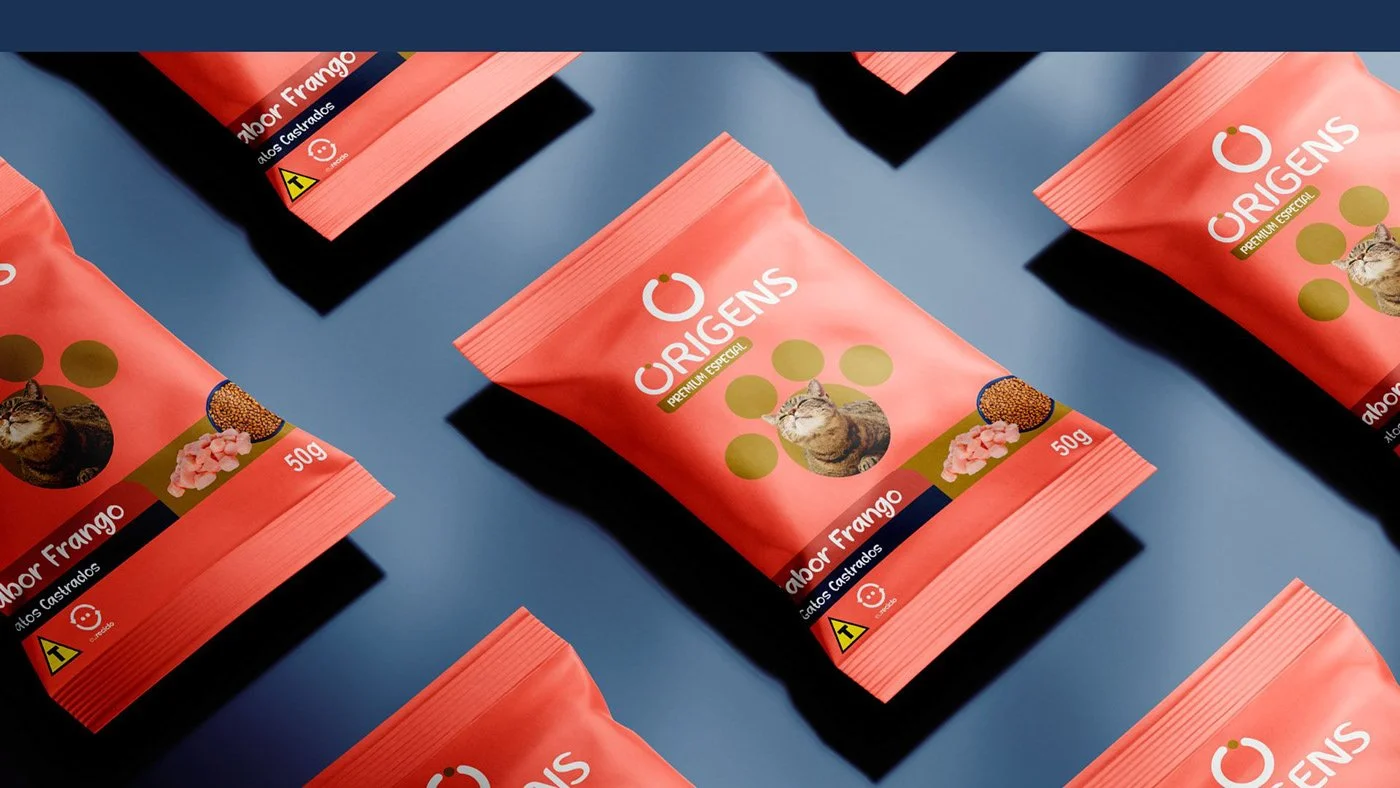
For many pet owners, feeding their beloved animals is more complicated than it seems. From accurately measuring the right amount of food to handling heavy, bulky packages, everyday tasks can become a challenge—especially for those with physical limitations. In response, my college project set out to design a pet food packaging solution that simplifies feeding routines through pre-portioned packets neatly nested within a larger package. Developed in partnership with Canguru for packaging and commissioned by Adimax/Origens, this project is not just about aesthetics—it’s about accessibility, independence, and care.
Design Strategy
Our design strategy focused on creating a solution that addresses key user challenges:
Accessibility: The packaging is divided into smaller, pre-dosed portions, making it easier to handle, open, and transport—ideal for users with limited strength or motor skills.
Functionality: Each smaller packet ensures accurate measurement, eliminating guesswork and waste. Its lightweight nature and user-friendly design offer independence to those who might otherwise rely on help.
Visual Alignment: The design maintains a simple aesthetic that aligns with the partner brands (Adimax/Origens), using clean lines and a straightforward color palette that communicates reliability and clarity.
Inclusivity: Every design decision was informed by a commitment to make feeding pets a stress-free experience for all, regardless of physical ability
Understanding the Audience Through the Persona

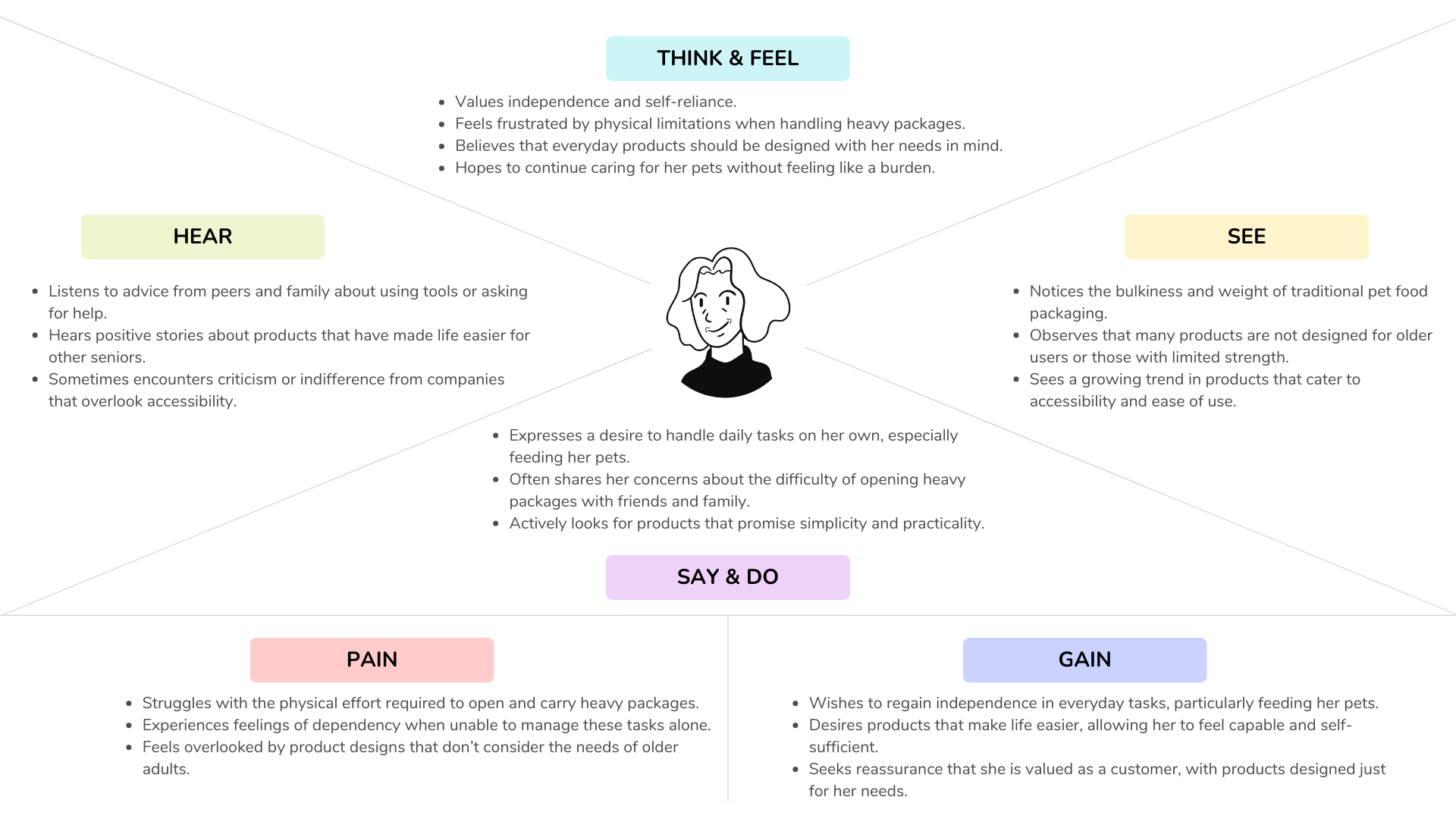
Meet Camila, our guiding persona. Camila is a 60-year-old widow living alone in Garopaba, Santa Catarina, with her three cats. Despite her love for her pets and her creative hobbies—such as knitting cute pet accessories—Camila faces a daily struggle with heavy and cumbersome pet food packages. She values her independence and yearns to perform everyday tasks without having to rely on her neighbor, who happens to be her grandchild. Camila’s story was central to our design process, ensuring that the final packaging is both practical and empowering for users like her.
Empathy Map
To truly capture Camila’s experience, I created an empathy map highlighting her thoughts, observations, actions, and feelings:
CSD Matrix
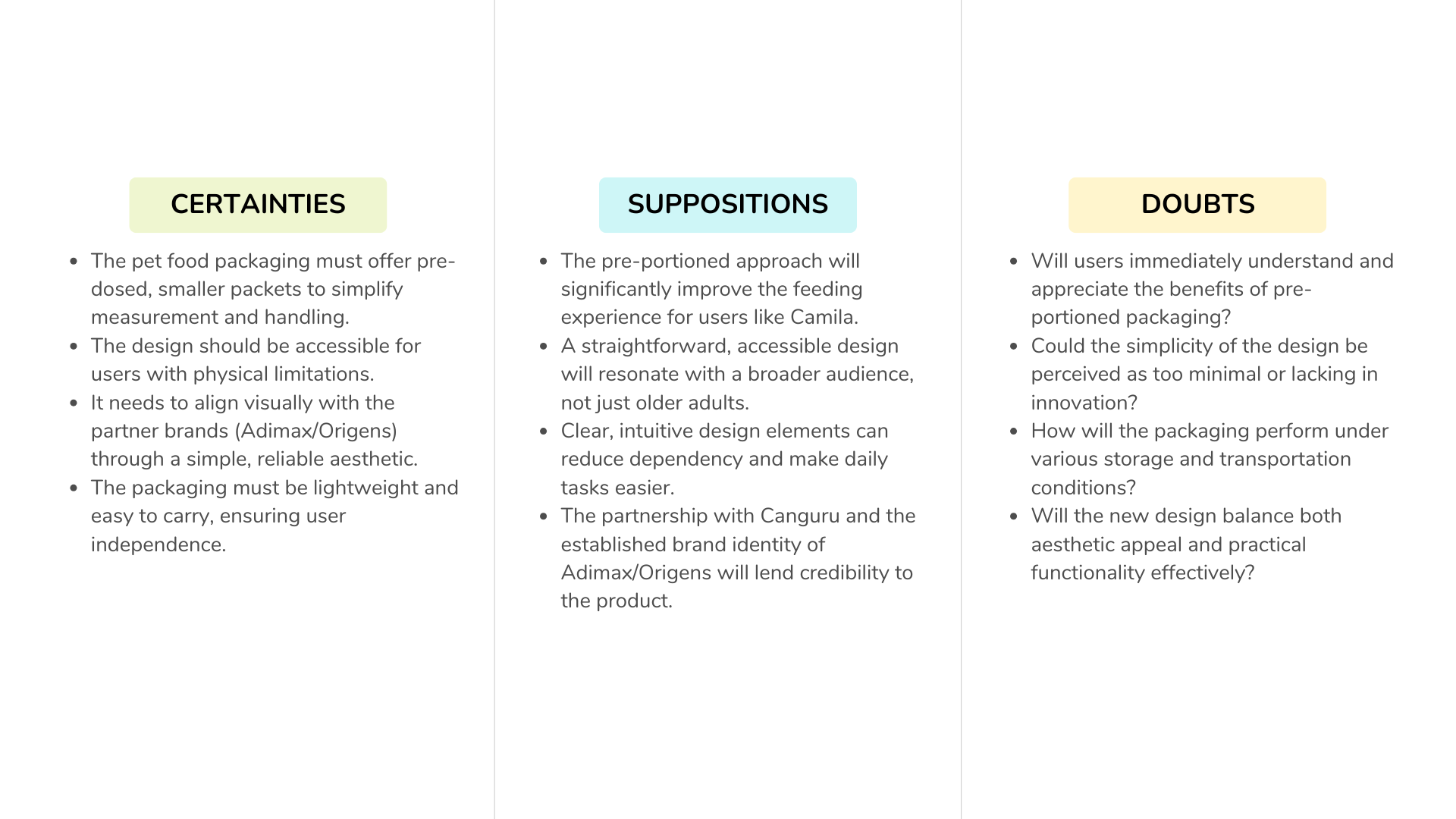
To structure our design decisions, we used the CSD Matrix (Certainties, Suppositions, Doubts):
The Final Packaging Solution
The final design for our pet food packaging is a result of careful research, empathy, and iterative design processes. It not only addresses the physical challenges faced by pet owners—such as accurately measuring food and handling heavy packages—but also champions independence and accessibility for everyone. By dividing the packaging into pre-dosed, smaller packets, we have created a solution that is easy to handle, carry, and open, ensuring that even those with limited strength can feed their pets without extra help.
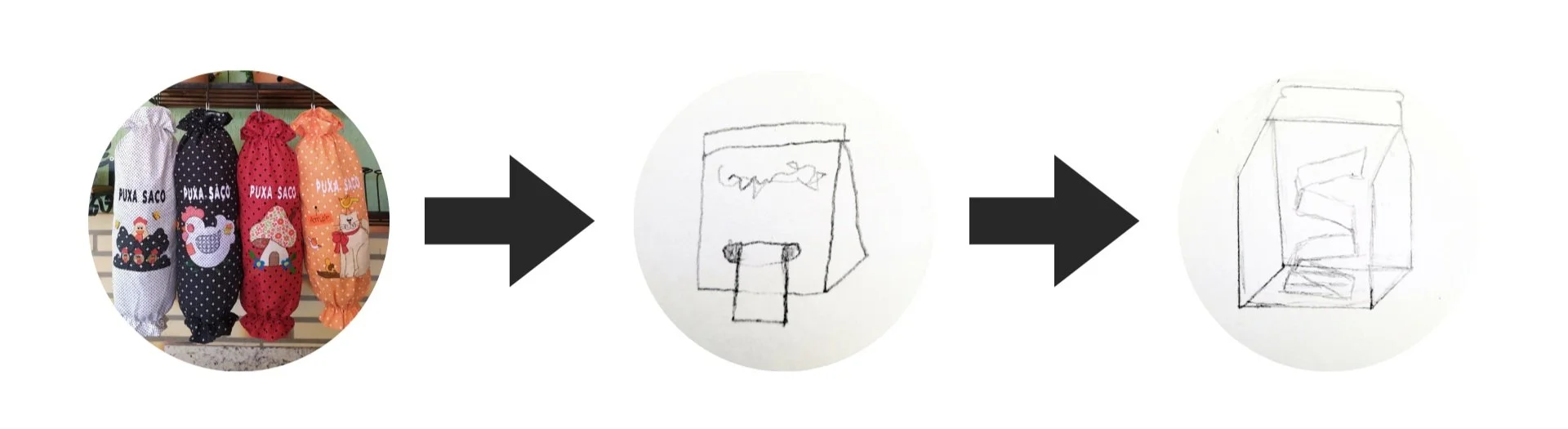
Inspired by the iconic Brazilian “puxa saco”—a plastic bag holder that allows one bag to be pulled while the next is seamlessly dispensed—we designed an internal dispensing system where one portion packet is always ready to go. This clever mechanism adds familiarity and intuitive usability, allowing users to effortlessly remove one food pack at a time while keeping the remaining ones organized inside the main package.
The design maintains a clean, simple aesthetic in line with Adimax/Origens, focusing on functionality while still communicating trust and reliability. Ultimately, this project is a testament to how thoughtful design can transform everyday challenges into empowering experiences, ensuring that every pet owner, like Camila, can care for their animal companions with dignity and ease.